



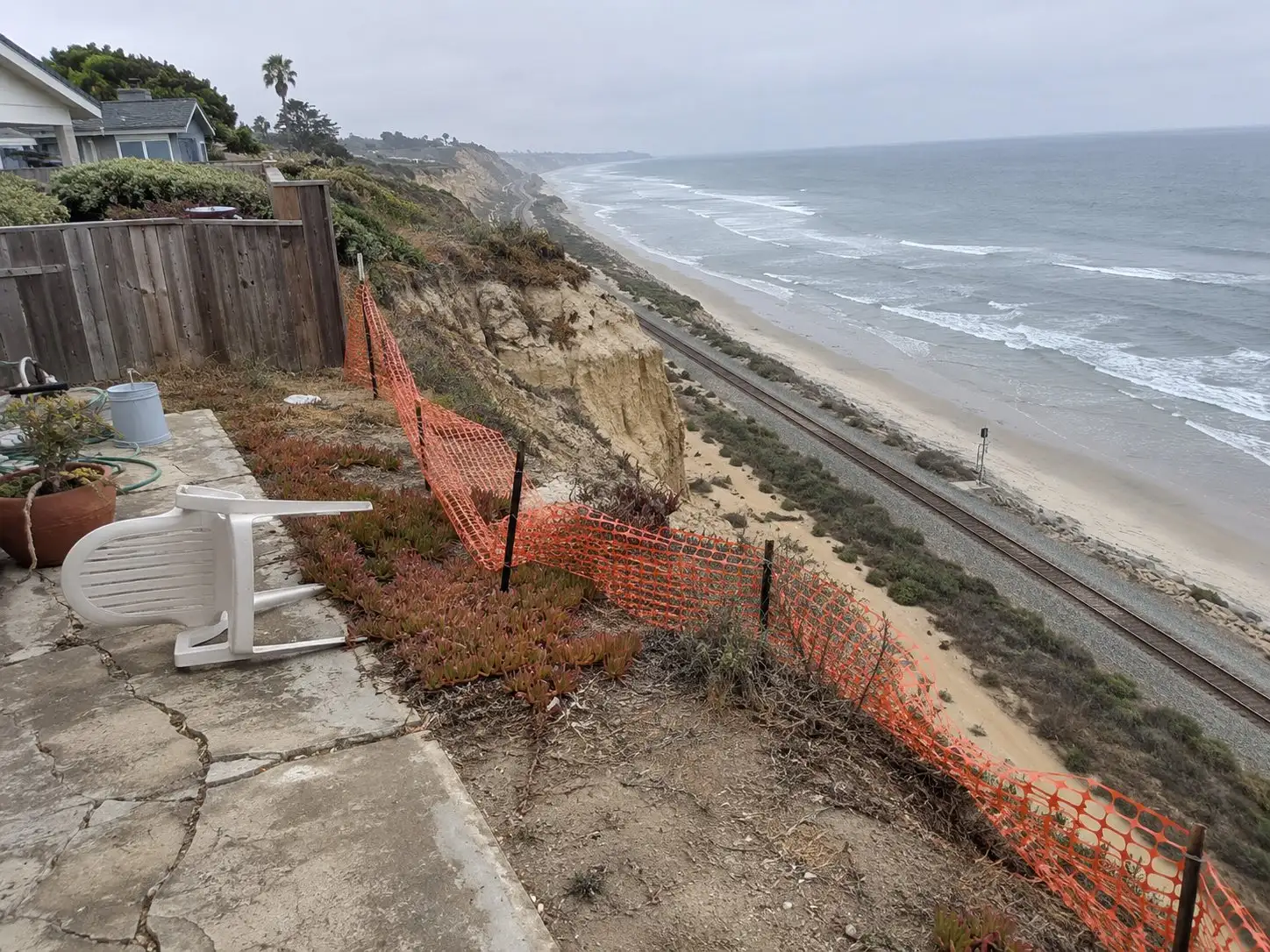
Bluff erosion is the one hazard in Del Mar that a map or a standard report does not fully capture. It moves slowly most years, then quickly after a wet winter, and it affects different lots differently depending on where they sit.
If you own a bluff-top or beach-area home and plan to sell, the useful question is not whether the bluff erodes. It does. The useful question is what you know about your lot, what you can document and what a buyer’s side is going to ask. This page covers the rules and the checks, using the City of Del Mar’s own planning documents.
How fast do Del Mar’s bluffs actually erode?
There is no single rate, and anyone quoting one figure for the whole coast is simplifying. The City of Del Mar’s Sea-Level Rise Adaptation Plan includes a table of historical south bluff retreat estimates. They run from 0.14 feet a year for 1943 to 1978, to 0.22 feet a year in a 1978 study, to 0.4 to 0.6 feet a year in a 1999 study, to under one foot a year in a 2000 federal estimate.
What matters more for a seller than any single rate is how the plan describes the pattern. It says a large share of bluff erosion and retreat comes from periods of substantial rainfall that saturate the bluff and weaken the material until it fails. The same appendix warns that retreat of up to 12 feet could occur over the next 20 years in places, enough in several sections to reach the railroad tracks if nothing is done.
What the city’s plan says about retreat, sand and seawalls
The city’s plan favors protecting what exists. It prioritizes beach nourishment and sand management, river channel dredging and flood management. The city adopted a sand program in August 2020, which its Sea-Level Rise page calls a key first step toward its beach nourishment strategy.
On managed retreat, the plan is direct. The city concluded that planned retreat is not feasible in Del Mar and not as effective as the strategies it favors, citing economic, environmental, engineering, social, political and legal constraints, along with very high land values that make public purchase of private property difficult. The plan still lists retreat as a long-term option to revisit if conditions change.
This is a planning position, not a guarantee. The plan was submitted for review by the California Coastal Commission, which has appeal authority over shoreline protection permits in Del Mar, so the rules that govern your lot can shift as amendments are reviewed. Treat anything you read as a snapshot and confirm the current status with the city.
The overlay zones that apply to the lot
Del Mar’s Local Coastal Program adds layers on top of ordinary zoning. The Coastal Bluff Overlay Zone, Chapter 30.55 of the municipal code, exists to protect the fragile bluffs as a visual resource and to avoid the risks to life and property that come with bluff failure and shoreline erosion. The Beach Overlay Zone, Chapter 30.50, governs the beach area and the city’s rules for seawalls and emergency protective structures. There are also Bluff, Slope and Canyon rules in Chapter 30.52, and a separate chapter for setback seawall permits.
Which of these touches your property depends on the parcel. The plan also notes that the city applies minimum setbacks to property subject to flooding and bluff erosion hazards, and uses overlay zones as a way of disclosing risk to owners. Ask the city’s planning counter which overlays are mapped on your parcel and what setback and report requirements go with them. Do not assume the answer from a neighbor’s lot.
Stabilization work is not the same as protection for your lot
Much of the bluff stabilization along the coast has been done for the railroad. The plan says the cliff top retreated to a point that became a safety concern for the LOSSAN rail line, and that SANDAG and the North County Transit District responded with multiple stabilization projects, including soldier piles, which the plan describes as underground reinforced concrete columns.
That work is real, and it is visible. But a buyer should not read a stabilized stretch of bluff as a promise about a private lot above it. Ask what the work covers, who maintains it and whether anything on record ties it to your parcel. If you cannot answer, say so plainly instead of implying coverage.
Seawalls are regulated, not guaranteed
If you are a seller whose listing talks about a seawall, or a buyer counting on being able to build one, read the rules first. The plan says the Coastal Act and Del Mar’s Local Coastal Program allow seawalls or revetments when necessary to protect existing structures or public beaches in danger from erosion, when designed to eliminate or mitigate harm to the local sand supply. New development may not rely on protective devices that would significantly change natural landforms.
In the beach area, Del Mar voters adopted the Beach Preservation Initiative in 1988, which the Beach Overlay Zone implements. The plan says it allows seawalls only as a last resort within the Shoreline Protection Area. Any permit request for shoreline protection in Del Mar can be appealed to the Coastal Commission. A neighboring seawall tells you something about that lot’s history. It does not tell you what would be approved on yours.
For a comparison of how a neighboring city handles the same question, see bluff-top rules in Encinitas.
What a seller has to disclose
California requires the seller of a single-family home to deliver a completed transfer disclosure statement to the buyer, under Civil Code section 1102.3. The form is about what you know. If you have a geotechnical report, a repair record, a drainage fix near the bluff edge or a letter from the city about the bluff, you know about it, and it belongs in the conversation. The seller disclosure guide covers the form in general.
The Natural Hazard Disclosure is a separate document. Under Civil Code section 1103.2 it covers special flood hazard areas, dam failure inundation, fire hazard zones, earthquake fault zones and seismic hazard zones. Coastal bluff erosion is not on that list, so a clean report does not answer the bluff question. The NHD report guide explains what the document does and does not cover.
If any work near the bluff edge was done without a permit, that is its own disclosure issue, covered in the guide to unpermitted work.
How to prepare before you list
Gather what already exists. Pull the geotechnical or soils report for the lot, any permits for retaining walls, drainage, decks or shoreline work, and the title report. If you have no recent geotechnical opinion, ask whether one makes sense before you list, since a pre-listing inspection covers the building and does not replace an engineer’s view of the bluff.
Then confirm with the city which overlay zones apply and whether any recorded conditions came with past approvals. Buyers on a coastal lot tend to ask for exactly these documents, and having them ready keeps the conversation about facts instead of fears. Describe the lot by its permits and reports, not by reassurance.
The short version
Del Mar’s bluffs retreat unevenly, with most damage coming in bursts after heavy rain, and the city’s own plan favors sand, stabilization and flood work over buying out homes. Seawalls are regulated and appealable, the standard hazard report does not cover bluff erosion, and a seller has to share what they know about their lot.
If you are weighing a sale and want a starting number before the document work, try the home value tool. It is a starting point before a conversation about your specific property.
Common questions
How fast do the Del Mar bluffs erode?
There is no single number. The City of Del Mar's Sea-Level Rise Adaptation Plan lists historical estimates for the south bluff that run from about 0.14 feet a year to under one foot a year, with one 1999 study at 0.4 to 0.6 feet a year. The plan also says much of the retreat comes in bursts after periods of heavy rain, so a yearly average hides how the bluff actually fails.
Does a Del Mar seller have to disclose bluff erosion?
A seller has to disclose what they know. California Civil Code 1102.3 requires the seller of a single-family home to deliver the completed transfer disclosure statement, and a known erosion problem, a geotechnical finding or a repair on your lot is a known condition. The standard Natural Hazard Disclosure zones are flood, dam inundation, fire, earthquake fault and seismic hazard, and they do not list coastal bluff erosion, so a clean NHD report does not mean the bluff question is answered.
Can a bluff-top owner build a seawall if erosion gets close?
Not automatically. The plan describes the Coastal Act and Del Mar's Local Coastal Program as allowing seawalls or revetments when necessary to protect existing structures in danger from erosion, designed to limit harm to the local sand supply, and says new development may not rely on them. Any shoreline protection permit in Del Mar can be appealed to the California Coastal Commission.
Has Del Mar chosen managed retreat?
No. The city's Sea-Level Rise Adaptation Plan states that planned retreat is not feasible and not as effective as the favored strategies, which center on beach nourishment, river dredging and flood management. The plan does leave retreat open as a long-term option to be reconsidered if conditions change.
What should a buyer ask for on a bluff property?
The geotechnical report for the specific address, the permit history for any retaining walls, drainage or shoreline work, and the title report. Those three documents say more about the lot than any neighborhood-level erosion figure.
