


Home hardening means changing the parts of a house that let a wildfire ember get inside and start a fire, not building a wall against flames. Most homes that burn in a California wildfire ignite from embers landing on a roof, slipping through a vent, or catching something flammable against the wall, often before the main fire front ever arrives.
What home hardening actually means
Hardening targets the places embers get in. A Class A roof is the baseline, since roofing material is one of the most common ignition points. Vents need ember- and flame-resistant mesh, not standard screen, because a vent is just a hole in the building envelope otherwise. Gutters that collect dry leaves and pine needles become kindling right at the roof edge, so keeping them clear matters as much as the vent itself. Eaves, whether open or enclosed, need ignition-resistant material on the underside. Dual-pane windows with at least one tempered pane resist breaking from radiant heat, which matters because a broken window lets embers and heat straight into the house. Decks attached to the structure need noncombustible or fire-retardant-treated material, especially near the house. And the ground within 5 feet of the walls, the area now commonly called Zone 0, needs to be clear of mulch, plants, and anything else that would let an ember sitting there ignite the siding.
What Chapter 7A and the residential code require for new construction
Chapter 7A of the California Building Code, mirrored for houses in the California Residential Code, sets the construction standards behind all of this. It applies to new construction, additions, and substantial remodels in fire hazard severity zones, both state responsibility areas and local wildland-urban interface zones, and it has applied to permit applications since July 2008.
The standards are specific. Roofs have to carry a Class A rating tested under ASTM E108 or UL 790. Vents have to pass ASTM E2886, a test that checks resistance to embers, flame, and radiant heat, which rules out plain mesh screen. Exterior walls need noncombustible material, ignition-resistant material, or heavy solid wood construction. Decks within 10 feet of the building have to meet a fire performance standard or use noncombustible material, with metal flashing where the deck meets the wall. None of this is optional for a new build in one of these zones. For an older home, it only kicks in when you pull a permit for an addition or a big enough remodel.
What defensible space law requires around the home
Two statutes cover the ground around the house. Public Resources Code 4291 applies in state responsibility areas, and Government Code 51182 applies to very high fire hazard severity zones inside city and county fire jurisdictions. Both set the same basic structure: defensible space out to 100 feet from the structure, or to the property line if that comes first.
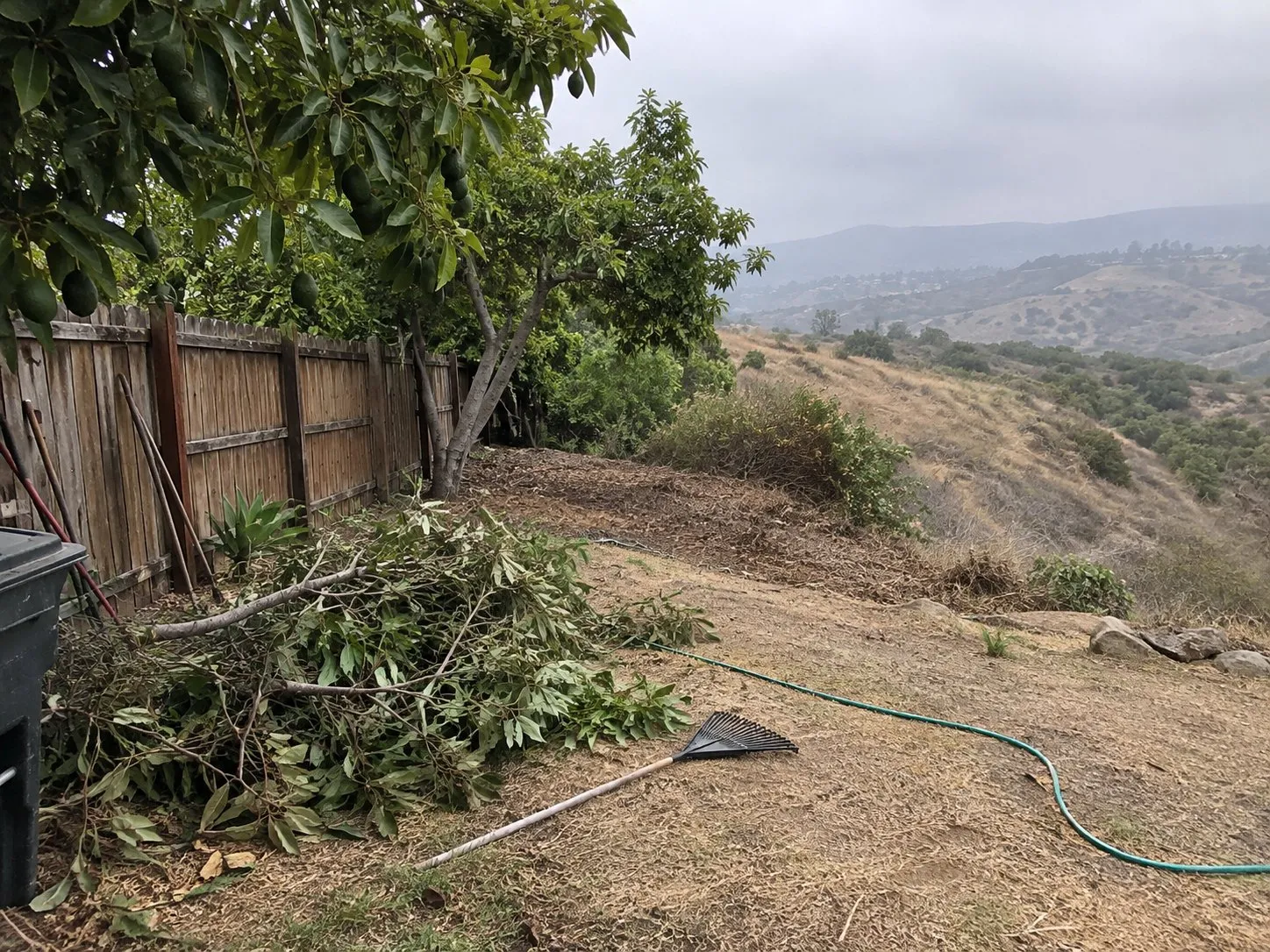
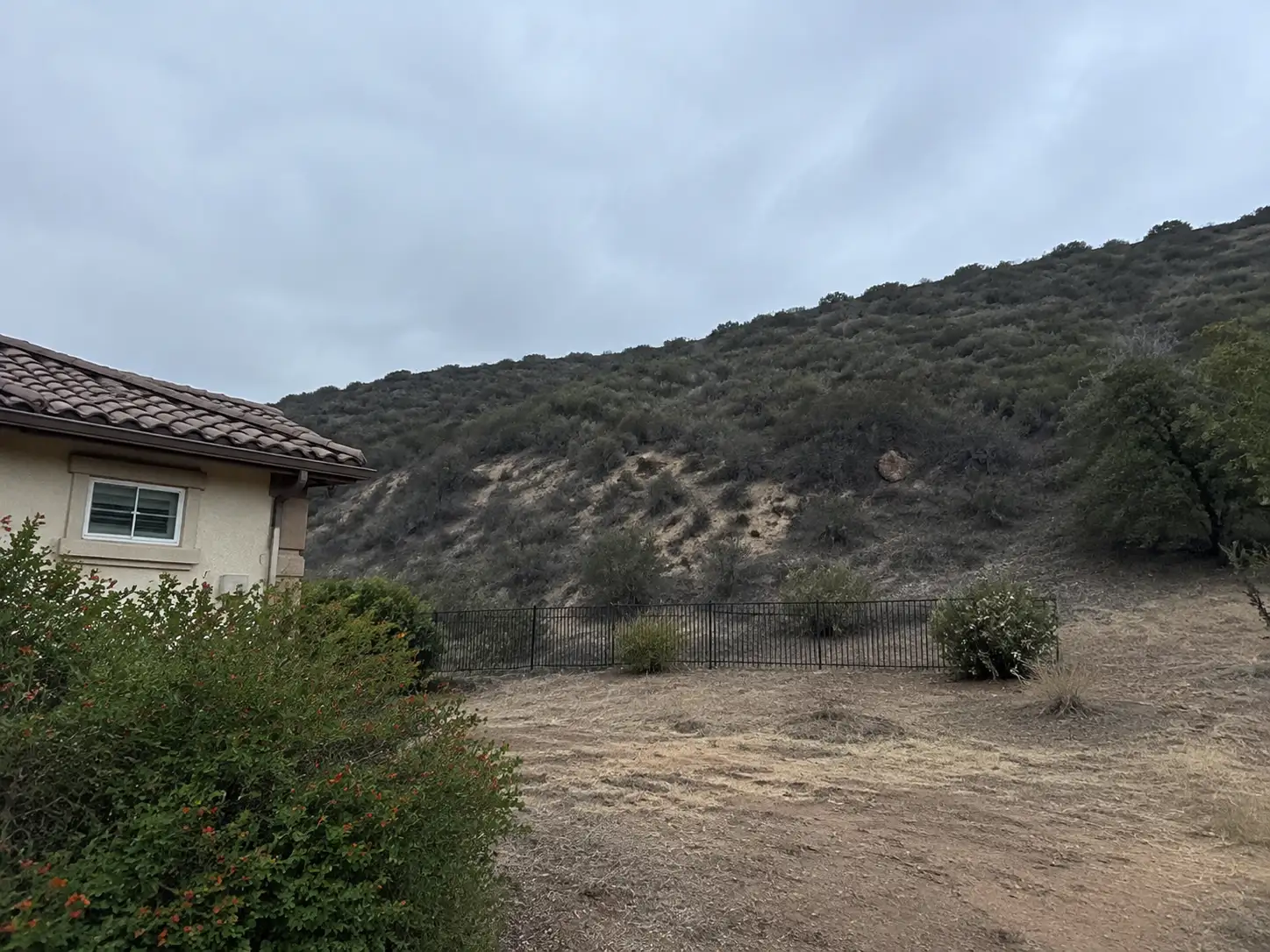
Inside that 100 feet, the intensity changes by distance. The first 5 feet is the ember-resistant zone, meant to be clear of anything an ember could ignite. From 5 to 30 feet the law calls for more aggressive fuel reduction, spacing plants and clearing dead material. From 30 to 100 feet the goal shifts to breaking up fuel continuity so a ground fire loses momentum before it reaches the house. Property owners also have to keep branches back from chimneys and keep the roof clear of leaves and needles.
That 5-foot ember-resistant strip is often called Zone 0 now, and the state has been working to turn it into its own set of enforceable rules. Those rules have been moving through the Board of Forestry and their status has changed more than once, so check CAL FIRE before you rely on any version of them. Either way, the 5-foot area is already covered by the general defensible space requirement.
Does hardening actually lower your insurance bill
It can, and by regulation it has to be considered. California’s Safer from Wildfires regulation, a Department of Insurance rule in Title 10 of the California Code of Regulations, section 2644.9, requires any admitted insurer that factors wildfire risk into its pricing to offer premium discounts for a defined list of mitigation measures. Those measures span community-level designations, defensible space work, and home hardening items like a Class A roof and ember-resistant vents. An insurer can set its own discount amount, but it cannot ignore documented mitigation entirely. If your home has already been dropped to the FAIR Plan or you’re dealing with a non-renewal notice, hardening work and the paperwork behind it are what give you something to negotiate with when you shop for standard coverage again.
Wildfire Prepared Home: a separate certification
Wildfire Prepared Home is a voluntary designation run by the Insurance Institute for Business and Home Safety, a nonprofit funded by insurers, not a state program. A homeowner works through a checklist, pays an application fee, and has the work confirmed by a third-party evaluation. The program has two tiers, a base level and a more demanding Plus level. It’s separate from the state’s Safer from Wildfires discount requirement, though the underlying work overlaps with what that regulation already rewards.
What sellers have to document and disclose
Two disclosure rules apply specifically to homes in high or very high fire hazard severity zones, and they show up together in most transactions. Civil Code 1102.19 requires the seller to hand the buyer documentation that the property meets defensible space requirements, either proof of compliance with Public Resources Code 4291 or a local vegetation ordinance, or, where no local program inspects for it, documentation from within the prior six months. If none of that exists, the buyer and seller can instead sign an agreement for the buyer to get that documentation within a year after closing.
Civil Code 1102.6f applies on top of that for older homes. If the property is in a high or very high fire hazard severity zone and was built before January 1, 2010, the seller has to give the buyer a specific written statement that the home was built before the wildfire building code standards took hold and may need improvements to meet them. That requirement has been in place since January 1, 2021. Both disclosures pair with the rest of the state’s natural hazard disclosure reports, and they come up in fire-zone sales in places like Fallbrook.
The short version
Home hardening is about closing the specific paths embers use to get into a house, from the roof and vents down to the first 5 feet of ground around the walls. New construction in a fire hazard zone has to meet Chapter 7A standards, existing homes have defensible space obligations under state law, insurers are required to credit documented mitigation, and sellers in these zones carry two separate disclosure duties at closing. None of it is optional paperwork. It’s the difference between a home that keeps its insurance and one that doesn’t, and a seller who’s ready for it and one who finds out in escrow.
If you want to know where your home stands before you list it, start with the home value tool. It is a starting point before a conversation about your specific home.
Common questions
What is Chapter 7A?
Chapter 7A of the California Building Code sets ignition-resistant construction standards for roofs, vents, siding, windows, decks, and eaves. It applies to new construction, additions, and substantial remodels in designated fire hazard severity zones, and has covered permit applications since July 2008.
Does home hardening lower insurance costs?
It should. Under California's Safer from Wildfires regulation, insurers that price wildfire risk into their rates are required to offer discounts for specific, documented mitigation, including a Class A roof, ember-resistant vents, and defensible space clearance.
What is Zone 0?
Zone 0 is the ember-resistant zone, the area within 5 feet of the home. The state Board of Forestry has been writing separate Zone 0 rules for that strip, and their status has been changing, so check CAL FIRE for where they stand today. Existing defensible space law already reaches that same 5 feet.
Do I have to prove defensible space when I sell?
If the home is in a high or very high fire hazard severity zone, yes. Civil Code 1102.19 requires the seller to give the buyer documentation of defensible space compliance, or, if none exists, a signed agreement for the buyer to get it within a year of closing.
What is the home hardening disclosure for older homes?
If the home is in a high or very high fire hazard severity zone and was built before January 1, 2010, Civil Code 1102.6f requires the seller to give the buyer a specific written disclosure stating the home predates the wildfire building code standards and may need hardening improvements.