



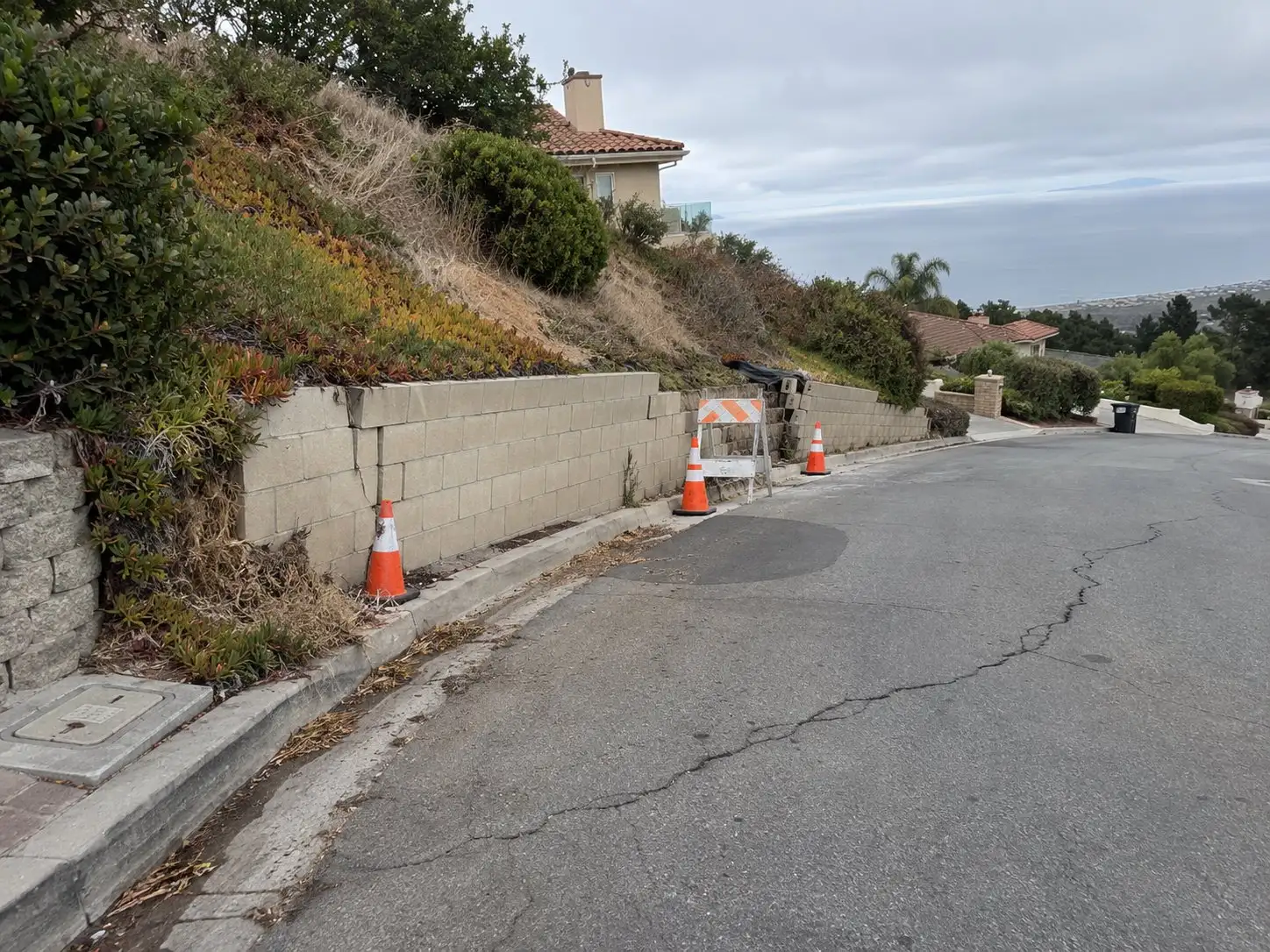
Rancho Palos Verdes has one of the more unusual rule sets in Southern California for a residential property. Inside the Greater Portuguese Bend Landslide Complex, the city no longer allows new homes or additions. Repairs and replacement are still possible, but only within what already exists.
If you are thinking about buying or selling in or near that area, the rules shape what a buyer can do with the property, so they belong at the front of the conversation, not the end of escrow. This guide sticks to what the city and the state have published, and it flags what you should confirm directly.
What do the city’s Landslide Area Development Regulations do?
They permanently prohibit new residential construction in the landslide area, and they allow limited repair work through a permit. The City of Rancho Palos Verdes says its City Council adopted the ordinance on August 19, 2025, amending Chapter 15.20 of the municipal code, and that the regulations took effect September 18, 2025. The city’s page refers to it as Ordinance No. 692.
Before that, the area was under a two-year construction moratorium that began in October 2023 and ran through October 2, 2025. The city also points to an earlier moratorium from 1978 for the same landslide complex. The permanent rules replaced the temporary two-year one.
The city describes the regulated area as approximately 715 acres within the mapped ancient landslide complex. It also says eight parcels were added when the map was updated, seven in Seaview and one in the Portuguese Bend Beach Club, while one cliffside strip south of Seacove Drive was removed.
What is prohibited?
New residential construction is prohibited, and so are home additions. The city’s summary also lists new attached or detached garages, some accessory structures, and new or repaired swimming pools. It states that previously granted permits for new construction are revoked.
For a buyer, that last point matters. A permit that was once approved for a remodel or new build on a lot may no longer be a path forward, so a seller’s earlier plans or old plan sets do not tell you what you can build now.
What can an owner still do?
An owner can replace, repair or restore existing development within its existing footprint by applying for a Landslide Exception Permit. The city’s page describes this as work within the same square footage, and it lists maintenance that does not increase land coverage or water use.
The city also lists several smaller items it treats as eligible for the exception permit: storage sheds up to 320 square feet with no foundation, non-remedial grading of up to 50 cubic yards cumulatively, permanent demolitions, fences and hedges without grading or retaining walls, and code compliance work for structures built before 1978.
Treat that list as a summary, not a permit. The ordinance text and the city’s planning staff decide what a specific project qualifies for, and the details can change with the parcel. Get the answer from the city in writing before you price a repair or an offer around it.
How do you tell whether a parcel is in the landslide area?
Check the city’s boundary map, then confirm with the city. The city publishes the Landslide Area Development Regulations Boundaries Map as a PDF on its Landslide Area Development Regulations page, and it lists landmovement@rpvca.gov as the contact for questions.
Parcels near the line need extra care. The city states that for a property the boundary crosses, only the portion inside the boundary is subject to the regulations. A parcel can be partly in and partly out, which changes where a structure could go and what a permit would cover.
A street address on a listing is not proof of location. Match the parcel to the map, not the neighborhood name, and ask the city about anything within a few lots of the boundary. Moratorium status and landslide-area status are separate questions from the state hazard zones described next.
What do the state hazard zone and the natural hazard report say?
The natural hazard disclosure asks whether the home is in a state-mapped Seismic Hazard Zone. California Civil Code section 1103.2 sets out the form, and one line asks whether the property is in a seismic hazard zone under Public Resources Code section 2696, with answer options for a landslide zone, a liquefaction zone, no, or map not yet released by state.
The California Geological Survey produces those seismic hazard zone maps, and the third-party company preparing the report checks them for the seller. Our guide to natural hazard disclosure reports covers who orders the report and what its boxes mean.
The state map and the city’s regulated area are two different sets of lines drawn for different purposes. A property can appear on one and not the other, and a clean answer on the state line does not tell you the city’s development rules do not apply. Read the city map and the report side by side.
What about insurance?
Ask your insurer directly, before you make an offer. Earth movement is commonly a topic in which policy wording matters a great deal, and a standard homeowners policy may not respond the way a buyer expects. This page does not state what any particular policy covers; the policy wording decides.
Useful questions for an agent or broker: whether the policy excludes earth movement or landslide in its exclusions section, whether any endorsement or separate policy is offered for that peril, whether the company will write a policy at all for an address in the mapped area, and what happens to an existing policy at renewal. If a company declines, the California FAIR Plan guide explains what that plan does and does not cover.
Sellers should also expect the buyer’s lender to ask for proof of insurance. A property a buyer cannot insure to the lender’s standards is a property that can stall in escrow, so start the insurance question during the listing period, not after acceptance.
Are there buyout or assistance programs, or utility shutoffs?
The city page on the regulations does not describe a buyout program, a state or federal assistance program, or utility shutoffs, so this guide does not either. The page does say that dozens of homes have been red-tagged or yellow-tagged because of land movement. A red or yellow tag is a building official’s status on a structure, and a buyer should ask what tag, if any, a home has and why.
If someone tells you a program or a service interruption applies to a specific street, ask for the city or utility notice in writing. Do not price a purchase on a rumor. The same goes for any claim about future buyouts: if the city has not published it, it is not something you can count on.
What should sellers disclose?
Sellers should disclose what they know, and the landslide area and any land movement history are the kind of facts a buyer will want. California’s Transfer Disclosure Statement and related forms ask sellers about known problems, and our seller disclosure guide walks through how those forms work. If your home has cracked slabs, shifting walls, or a tag from the city, put it in writing.
Past work on a home in this area also needs a paper trail. Repairs, retaining walls, or additions done without permits are a separate issue, covered in our unpermitted work guide. Sellers who have permits, engineering letters or city correspondence should gather them before listing.
Structural questions also come up on these homes. Our earthquake retrofit guide explains foundation work, though a retrofit is not a fix for ground movement and does not change what the city permits.
Zarko Maletin is a Realtor and an InterNACHI certified home inspector. A home inspection looks at the structure, but it does not map a landslide or replace the city’s boundary map, a geotechnical report, or an insurer’s answer.
The short version
Inside the mapped Greater Portuguese Bend landslide area, Rancho Palos Verdes bars new homes and additions and allows repair and replacement within the existing footprint through a Landslide Exception Permit. The rules took effect September 18, 2025. Check the parcel on the city’s map, read the natural hazard report next to it, ask your insurer what the policy says about earth movement, and get any buyout or utility claim in writing from the city. If you are weighing a sale or purchase nearby, start with the home value tool.
Common questions
Can I build an addition on a home in the Rancho Palos Verdes landslide area?
Not under the city's current rules. The City of Rancho Palos Verdes describes the Landslide Area Development Regulations as prohibiting new residential construction, including home additions, in the mapped landslide area. Replacement, repair or restoration within the existing footprint can be pursued through a Landslide Exception Permit.
How do I find out whether a specific parcel is in the regulated area?
Start with the Landslide Area Development Regulations boundary map the city publishes as a PDF. The city states that where the boundary line crosses a property, only the portion inside the boundary is subject to the regulations. For a parcel near the line, ask the city at landmovement@rpvca.gov.
Does a standard homeowners policy cover landslide damage?
Do not assume it does. Earth movement is commonly treated differently from fire and other covered perils, and the answer sits in the actual policy wording. Ask your insurer or broker, in writing, what the policy says about land movement before you write an offer.
Does the natural hazard disclosure report show this?
Only partly. The California natural hazard disclosure statement asks whether a property is in a state-mapped Seismic Hazard Zone, with a landslide option. It does not replace the city's own landslide boundary map, so check both.
