



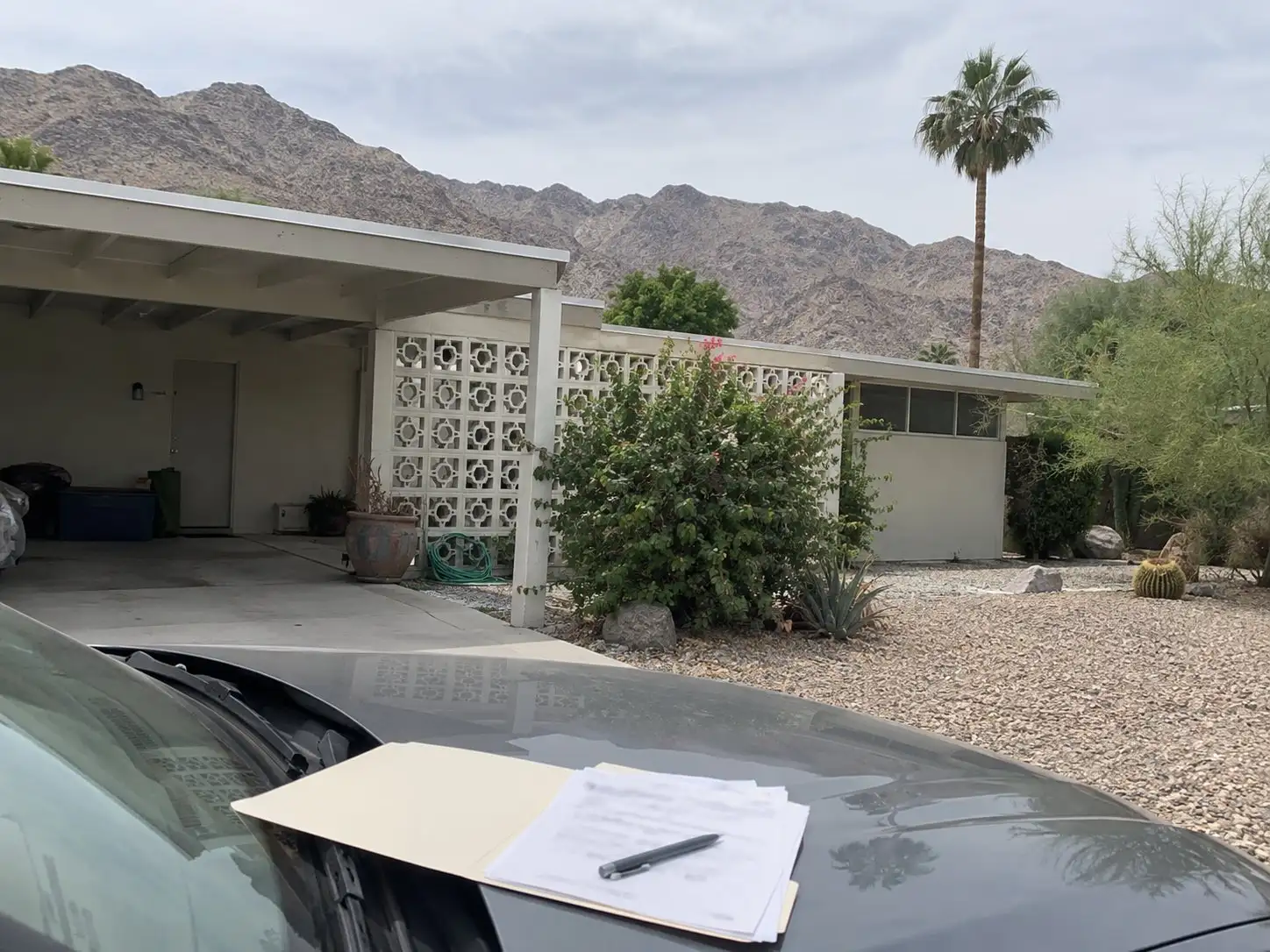
Palm Springs is unusual among California cities in how much of it sits on land the city does not fully control. Large sections of the city are within the Agua Caliente Band of Cahuilla Indians’ reservation, laid out in the historic “checkerboard” pattern of alternating square-mile sections. Buying or selling a home in one of those sections often means dealing with a land lease, and that changes the transaction in ways a standard fee simple sale does not.
What a land lease is
A land lease separates ownership of the home from ownership of the ground it sits on. The buyer purchases the house, the landscaping and any other improvements, and holds a leasehold interest in the underlying lot rather than owning the dirt itself. The land stays with the Agua Caliente Band, and the homeowner pays ground rent for the right to use it under a long-term lease. This is different from a typical California purchase, where the buyer gets fee simple title to both the structure and the land beneath it.
The three kinds of reservation land in Palm Springs
Reservation land within city limits falls into one of three categories, and which one applies to a given parcel changes what a buyer is actually acquiring. The City of Palm Springs Planning Department describes the categories as tribal trust land, land allotted to an individual tribal member that may or may not be leased, and fee land. Only fee land transfers the way a typical off-reservation property does. Tribal trust and allotted land are generally leasehold, and the city and the tribe have worked under a formal agreement since 1977 that governs how development on reservation parcels gets reviewed.
How to tell if a property is leasehold
The preliminary title report is the first place this shows up, since it will describe the interest being insured as a leasehold estate rather than fee title. Ask for that report early, not after you are already in contract. The second document to request is the lease itself, which spells out the term, the rent, the renewal options and any restrictions on financing or transfer. The City of Palm Springs points residents to a land status map maintained by the tribe’s Geospatial Information Systems department, which shows current ownership status across the checkerboard, and that map is a reasonable starting point before you ever look at a specific address.
Lease term and remaining years
How much time is left on the lease is often the single most important number in the file. Most leases of Indian trust or allotted land are capped by federal law at a 25-year initial term with one 25-year renewal, for a 50-year maximum. Palm Springs is an exception written directly into that law. Under 25 U.S.C. 415(a), leases on the Agua Caliente reservation are specifically authorized for terms of up to 99 years, which is why long ground leases are common here rather than the shorter terms seen on some other reservations. Federal leasing regulations at 25 CFR Part 162 require every residential lease to state a definite term and, if there is a renewal option, a definite term for that renewal as well. A lease with decades still on the clock is a very different proposition from one nearing its end, and the remaining term should be one of the first things you confirm, not something you assume.
Ground rent and how it can change
Ground rent is the amount the leaseholder pays for use of the land, separate from any mortgage payment on the home itself. It is set out in the lease and is not fixed forever in most long-term ground leases. Lease terms can tie rent adjustments to an index such as the Consumer Price Index, with the rent recalculated periodically off the appraised value of the land or a similar formula written into the lease. Whether a particular Palm Springs lease has a cap on those increases, how often the rent resets, and what happens at renewal are all questions the lease document itself answers, and they are worth reading closely rather than taking on faith from a listing description.
Why remaining term affects financing
Lenders care about how many years are left on the lease because their collateral is the leasehold interest, not the land itself, and that interest becomes worth less as the lease term runs down toward its end. Fannie Mae’s Selling Guide sets a specific rule for conventional loans on leasehold estates: the lease must have an unexpired term that exceeds the loan’s maturity date by at least five years, and any renewal being counted toward that cushion has to be firm, not merely an unexercised option. For FHA-insured loans, federal law requires a leasehold mortgaged under the program to be either a renewable 99-year lease or one with at least 10 years remaining beyond the mortgage’s maturity date. These are general baseline rules, and specific investor and lender overlays can differ, so confirm directly with your loan officer how many years your particular lease needs to have left, and how the lender treats a lease that is up for renewal before the loan matures.
What it means for resale
A shrinking lease term can affect resale the same way it affects the original financing, because the next buyer’s lender will run the same math on the years remaining. A home with 60 or 70 years left on its ground lease presents a different financing picture to a future buyer than the same home would with 20 years left, even if nothing about the house itself has changed. Leasehold mortgages on tribal land also commonly route through the Bureau of Indian Affairs for approval, since Agua Caliente leasehold interests generally require BIA and landowner consent to be mortgaged, assigned or transferred under 25 U.S.C. 415(a) and 25 CFR Part 162. Ask early whether a pending sale needs that kind of sign-off, since it can add a step to escrow that a standard fee simple sale does not have.
Disclosure and due diligence steps
Treat the lease itself as a document to review before you write or accept an offer, not paperwork to skim during escrow. Request the preliminary title report and the full lease, including any amendments, and read the sections on term, renewal, rent adjustment and any restrictions on financing or transfer. If a renewal has already happened or needs to happen before your loan matures, ask for the documentation proving it was properly exercised. Confirm with your lender in writing how many years of remaining term it requires for your specific loan program, since that answer determines whether the property is financeable as-is or needs a longer lease term first. The improvements themselves, the home and anything built on the leased lot, still deserve the ordinary scrutiny any purchase gets. Zarko Maletin, the Realtor behind this site, is also an InterNACHI certified home inspector, and the physical condition of the structure is a separate question from the land status, one worth having answered independently. For everything else the state requires sellers to disclose about the property itself, see the seller disclosure guide.
The short version
A land lease in Palm Springs means you own the home but rent the ground under it from the Agua Caliente Band, typically under a long-term lease that federal law allows to run as long as 99 years here. Check the title report and the lease itself for the remaining term, ask your lender in writing what minimum term it requires, and expect BIA involvement if the leasehold interest is being mortgaged or transferred. None of that makes a leasehold home a bad purchase. It makes it a different one, worth understanding before you are in contract rather than after. If you are weighing a leasehold purchase against a fee simple one elsewhere in the valley, or thinking about how a sale here compares to Prop 19’s base year value transfer or the mobile home ground rent rules covered in the Hemet space rent guide, those are useful points of comparison.
If you want a clearer read on where your specific property or purchase stands, start with the home value tool. It is a starting point before a conversation about your specific home.
Common questions
What is a land lease in Palm Springs?
It means the home and other improvements are owned outright, but the ground underneath them is owned by the Agua Caliente Band of Cahuilla Indians and rented under a long-term ground lease instead of purchased along with the structure. The buyer gets a leasehold interest in the land, not fee simple title to it.
How do I know if a Palm Springs property is on leased land?
Check the preliminary title report, which will identify the interest as a leasehold estate rather than fee simple, and ask for a copy of the underlying lease itself. The City of Palm Springs Planning Department also points buyers to the tribe's land status map, which shows which parcels are tribal trust, allotted and leased, or fee land.
Can Agua Caliente land leases run longer than other reservation leases?
Yes. Congress set a general 25-year cap on most Indian land leases, but a federal statute, 25 U.S.C. 415(a), specifically names leases on the Agua Caliente (Palm Springs) Reservation as eligible for terms of up to 99 years, which is why long ground leases are common here.
Does a land lease home qualify for a normal mortgage?
It can, but the lease terms have to fit the lender's rules, and those rules vary by loan type and by how many years remain on the lease. Ask your specific lender to confirm what it requires before you write or accept an offer, since the answer can change the financing timeline.
Who approves changes to an Agua Caliente ground lease?
The Bureau of Indian Affairs, acting for the Department of the Interior, generally has to approve leases of Indian trust and allotted land under 25 U.S.C. 415(a) and the leasing regulations at 25 CFR Part 162, alongside the landowner's own consent.
