



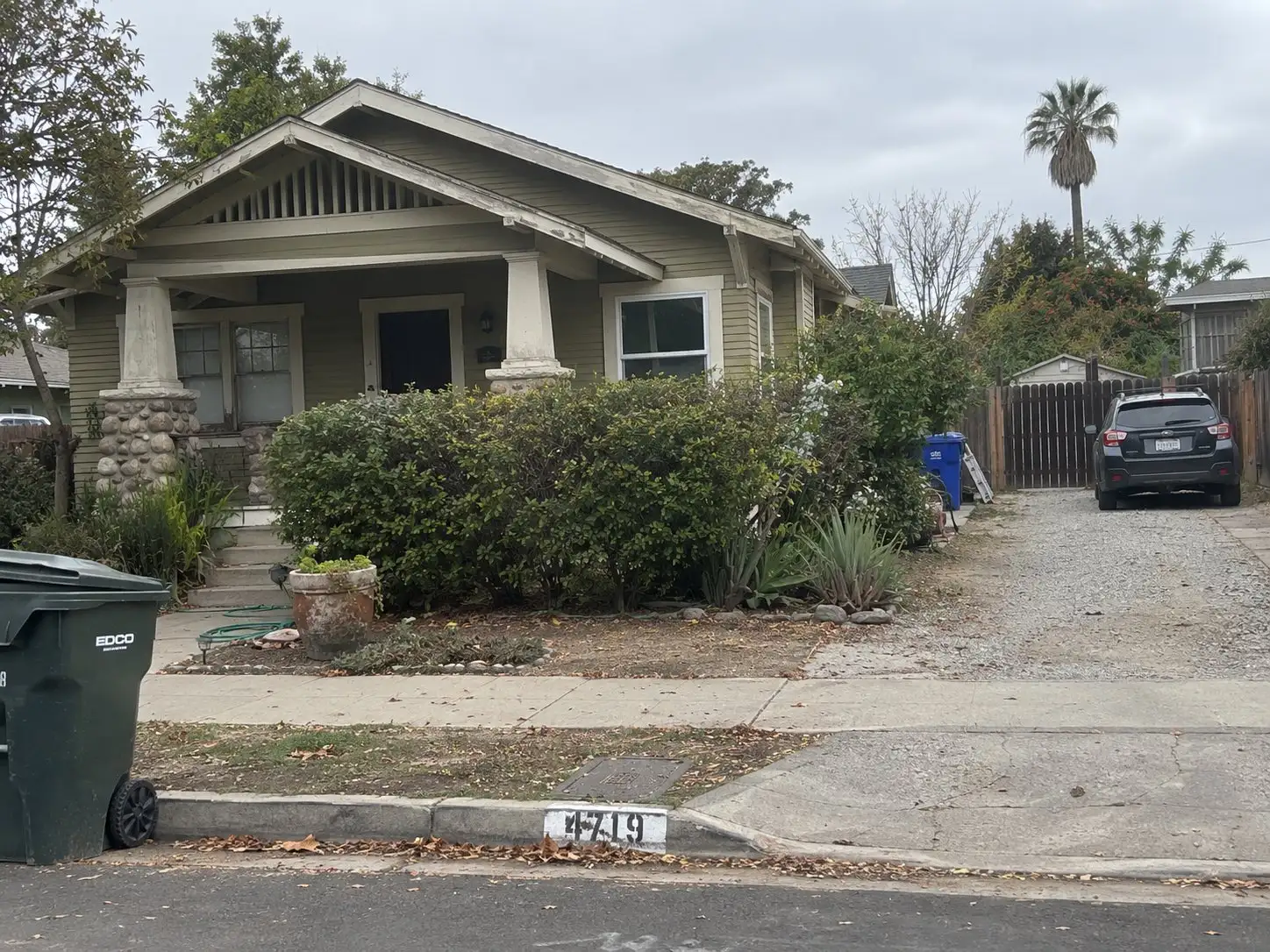
The Mills Act is a California law that lets a city sign a contract with the owner of a qualified historic home. The owner agrees to preserve the property, and the county assessor values it differently for tax purposes while the contract is in place. La Mesa uses it, and a La Mesa home with the right designation can be part of it.
That does not mean every older house in town qualifies. It is a narrow program tied to formal historic designation, and the contract follows the property from one owner to the next. This guide covers what La Mesa’s process looks like, what an owner commits to, and what a buyer or seller should confirm.
How does La Mesa use the Mills Act?
La Mesa uses it as a pairing of two things: a historic landmark designation, and a preservation agreement for the same property. The City’s Planning Division, in the Community Development Department at 8130 Allison Avenue, publishes a Mills Act Agreement Application, and the City’s own council agendas and minutes show landmark designation and a Mills Act agreement for one address being brought forward together, first to the Historic Preservation Commission and then to the City Council.
The state authority is Government Code section 50280 and the sections that follow it, which let a city or county contract with the owner of a qualified historical property. The California Office of Historic Preservation describes the result in plain terms: property tax relief in exchange for committing to restore and maintain a historic property for a minimum of ten years.
Which La Mesa homes can qualify?
A home generally has to be a designated historic landmark first. The City’s application form asks for the property’s landmark type, which can be local, state or national, and for the date of designation. If the property is only a potential landmark, the form says a Landmark Application is required along with it. In La Mesa the City Council designates landmarks on a recommendation from the Historic Preservation Commission, under the City’s historic preservation ordinance.
State law also requires the property to be privately owned and not exempt from property tax, and to be listed on a federal, state, county or city register of historic sites.
One point to confirm directly: as of the City’s 2021 Historic Preservation Commission records, commissioners and a preservation group were discussing whether La Mesa’s program should also reach homes that contribute to a historic district, which implies the program had been centered on individually designated landmarks. Ask Planning whether that has changed before you assume a home in an older neighborhood is eligible.
How does the City handle an application?
The application is filed with the Planning Division. It asks for the owner’s details, the historic name and address of the property, the assessor’s parcel number, a legal description, the landmark status, and a list of improvements the owner intends to make over the next ten years, in the owner’s order of priority.
From there, the City’s meeting records show a public process. The Historic Preservation Commission reviews the request and the planned improvements and recommends action. The City Council then votes on the resolutions that designate the landmark and authorize the preservation agreement. Commission minutes show that improvements can be tied to a deadline in the agreement, so the list is not decorative. For timing, fees and the current submittal steps, call Planning at 619.667.1177 or check the City’s website, since those details can change and this guide does not state them.
What does the owner commit to?
The owner commits to preserve the property, and where needed restore or rehabilitate it, for as long as the contract runs. State law requires a minimum term of ten years and requires the contract to provide for inspections to confirm the owner is keeping the terms. The agreement also renews each year unless a party gives notice, which is why the commitment can last well beyond ten years.
For a La Mesa owner, that makes the improvement list the practical heart of the deal. The roof, windows, doors, systems and exterior work named in the application are the work the City expects to see. If an owner lets the property decline or breaks the terms, state law lets the City cancel the contract after a public hearing or go to court to enforce it, and cancellation carries a fee set by state law.
Any work still needs the usual permits. Skipping them to save time adds an unpermitted work problem on top of a preservation compliance problem.
How does the tax effect work?
The assessor changes the valuation method. The California Office of Historic Preservation explains that properties under a Mills Act contract are assessed using an income approach instead of the standard market approach. In practice the assessor looks at what the property could earn as a rental, rather than at what similar homes have recently sold for.
That is as far as a general guide can safely go. The result depends on the property and the figures the assessor uses, so there is no number to quote, and a listing that promises one should be treated as a claim to check. The San Diego County Assessor’s office is the place to ask for an estimate.
It is also a different tool from a Prop 19 base year value transfer, which lets certain homeowners carry an existing tax base to a replacement home. A Mills Act contract moves nothing. It changes how one specific property is valued while the contract stays in force.
What happens when a Mills Act home sells?
The contract goes with the property. The Office of Historic Preservation notes that Mills Act contracts stay with the property when it is transferred and renew with automatic yearly extensions, so a new owner inherits both the rights and the obligations of the original agreement.
For a buyer, that cuts both ways. The lower valuation method may carry forward, but so do the preservation duties, the inspections and the improvement list that may still be unfinished. For a seller, the contract is part of what you are selling, and it belongs in your seller disclosure conversation instead of surfacing for the first time in the title report.
What should buyers and sellers ask before an offer?
Start with the paperwork. The agreement is recorded against the property, so it should be visible in a preliminary title report, and the City’s Planning Division can confirm whether an address has one. Then ask for these items:
- A copy of the recorded agreement, including the start date, the current term and the renewal language.
- The improvement list, and which items have been completed and which are still open.
- Any City correspondence about inspections or compliance.
- An estimate from the county assessor of how the property is valued today, rather than a number quoted in marketing.
A buyer should also budget for the condition of an older home. A pre-listing inspection is how a seller finds out what a buyer’s inspector is likely to flag, and it helps to know early which findings overlap with the agreement’s improvement list. For a neighboring East County example of how age shows up in an inspection, see older home inspection in El Cajon.
If you are the seller, describe the contract plainly: a recorded preservation agreement that transfers to the buyer. Do not promise a tax figure.
The short version
La Mesa signs Mills Act agreements with owners of designated historic landmarks, and the process runs through the Planning Division, the Historic Preservation Commission and the City Council. The contract trades a ten-year-minimum preservation commitment for an income-based valuation from the assessor, and it stays with the property when the home sells. Confirm designation status, the recorded agreement and the assessor’s estimate before you count on any savings.
If you are weighing a sale or purchase of an older La Mesa home and want the picture laid out before you commit, start with the home value tool. It is a starting point before a conversation about your specific home.
Common questions
Does La Mesa have its own Mills Act program?
Yes. The City of La Mesa's Planning Division, in the Community Development Department, publishes a Mills Act Agreement Application, and the City Council has approved Mills Act preservation agreements for designated landmarks over many years. The state law behind it is Government Code sections 50280 through 50290.
Does an older home qualify just because it is old?
No. The City's application asks for the property's landmark designation, and says that if the home is only a potential landmark, a Landmark Application is required too. Age alone does not create eligibility.
How long does a Mills Act contract last?
State law sets a minimum term of ten years, and the contract normally renews each year unless one side gives notice. La Mesa's application asks owners to list the improvements planned over the next ten years. Confirm the exact term and renewal language in the recorded agreement itself.
Does the contract transfer when the home sells?
Yes. The contract stays with the property, so the next owner inherits both the tax treatment and the preservation obligations for the years that remain. Ask for a copy of the recorded agreement before you write an offer.
How much will a Mills Act contract save?
There is no standard figure. The county assessor values a contracted property by an income method instead of the usual market comparison, and the result depends on the property. Ask the San Diego County Assessor for an estimate instead of relying on a number from a listing.
