



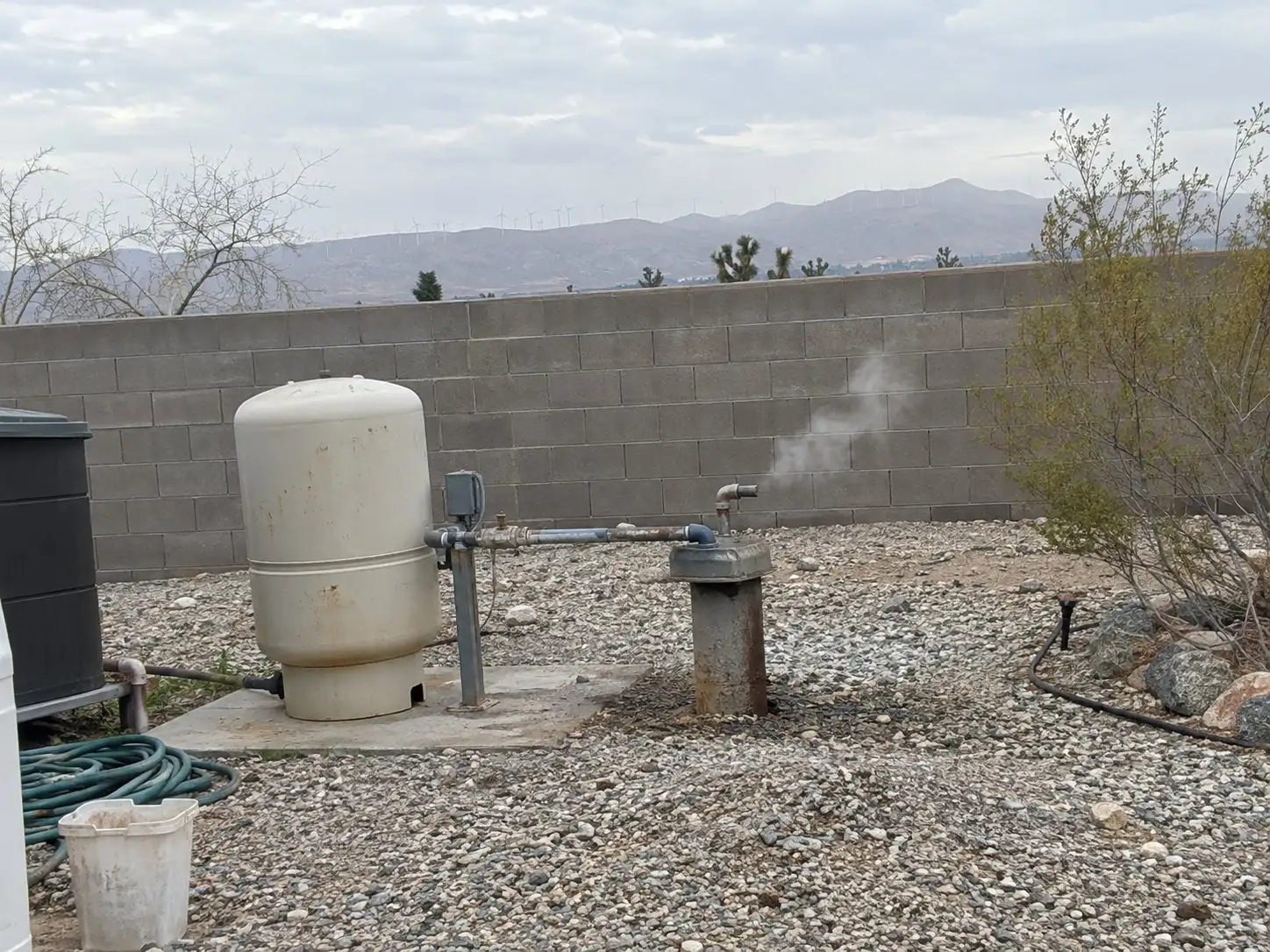
Most homes in Desert Hot Springs get their water from Mission Springs Water District, the same as any other city. What sets this market apart is the ground underneath it. The city sits above a groundwater basin known for producing naturally hot mineral water, and a number of older properties, along with most of the resort spas, still rely on privately owned wells rather than a connection to the public system. If you’re buying or selling one of those properties, the well is its own piece of due diligence, separate from everything else in the transaction.
Who regulates a private well here
A private well in Desert Hot Springs is permitted and inspected by the Riverside County Department of Environmental Health, not by the city. County ordinance requires a written application and a valid permit before anyone can dig, drill, bore, drive, reconstruct or destroy a well used to produce water, along with monitoring wells and geothermal heat exchange wells. In practice, that application is prepared by a state-licensed C-57 well driller, not the property owner. Once the work is done, the driller or owner has to submit a well completion report to the county certifying that the well was built or destroyed the way the approved permit described. Verify current requirements and fees with Riverside County Environmental Health directly, since ordinance details and processing steps can change.
What Mission Springs Water District actually does
Mission Springs Water District is the public water and wastewater agency for Desert Hot Springs, and it draws its own drinking water from a wellfield it owns and operates, separate from any private well on an individual parcel. MSWD does not permit private wells. Its role in this topic is different: the district describes groundwater protection, including reducing reliance on individual septic systems, as one of the ways it protects the aquifer that feeds its own wells. A homeowner with a private well should still confirm with MSWD whether the parcel is inside its service area and what, if anything, connecting to public water or sewer would involve, since that can affect financing and future costs. Confirm current service boundaries and program details directly with MSWD rather than assuming based on a neighboring property.
The aquifer, in plain terms
The area is known for naturally heated mineral water underground, and the public drinking water supply comes from the water district’s own wells. Exactly which water a given private well draws from is a question for the well’s records and a licensed well driller, not an assumption. The hot water is what built the city’s spa industry, and it’s also why a number of properties, particularly resort and multi-unit spa properties, have their own wells rather than relying on a municipal connection. Because the two aquifers behave differently, a well’s depth, temperature and water chemistry can vary quite a bit between properties that are close together. That is not something to estimate from a neighbor’s experience. It is something to verify well by well, through testing and through the well’s own permit history.
What the state requires when a well is built or changed
California requires anyone who constructs, alters or destroys a well, including a geothermal well, to file a well completion report with the Department of Water Resources within 60 days of finishing the work. These reports are public record. They are searchable through the state’s online well completion report map and open data portal, and a copy for a specific parcel can also be requested from DWR directly. For a buyer, this report is one of the more useful documents available, because it typically shows the well’s depth, construction date and the driller who did the work, all from a source independent of the seller.
Capping or destroying a well that’s no longer used
An old well that nobody uses anymore still needs to be properly destroyed, not simply capped and left in the ground. Riverside County requires abandoned wells on a property to be destroyed to its standards, commonly as a condition of getting a permit for a new well on the same parcel, and that work has to be performed by a licensed well driller and reported to both the county and the state. An improperly abandoned well is a route for surface contamination to reach groundwater, which is exactly what the destruction standards are meant to prevent. If a property has a well that has not been used in years, ask whether it was ever formally destroyed, or whether it is still sitting there unpermitted and unaddressed.
What to ask for before you buy a home with a well
Ask the seller for the well permit and the well completion report, and if the well was ever reworked or the pump replaced, ask for records of that too. Ask when the pump and any storage tank or pressure system were last serviced, since that equipment has a working life of its own separate from the well itself. Ask for a recent water test, and if there isn’t one, get one before you remove contingencies, covering both potability and, for a hot mineral well feeding a spa or pool, whatever temperature and mineral content testing is relevant to how the water will be used. None of this replaces a general home inspection. It sits alongside it, done by someone who specializes in wells rather than by the inspector covering the rest of the house. A pre-listing inspection is the right place to raise the well early, before a buyer’s own specialist finds a gap in the paperwork first.
Septic, sewer and the well question
Mission Springs Water District has run septic-to-sewer conversion work in parts of Desert Hot Springs for years, connecting parcels that previously relied on individual septic systems to its central sewer system as a groundwater protection measure. Whether a specific property is on septic, on sewer, or scheduled for a future phase of that conversion work is a fact to confirm directly with MSWD rather than assume, since it can affect both a well’s water quality and the cost of future improvements to the property. A septic system near a private well is also its own disclosure and inspection question, separate from the well permit itself, and worth raising with MSWD and a qualified inspector rather than guessing from the age of the neighborhood.
What this means at closing
Any of this that a seller already knows, whether it’s an unpermitted well, a well that was never formally destroyed, or a water test that came back with a problem, belongs on the disclosure paperwork. California’s Transfer Disclosure Statement asks sellers directly about known defects and known conditions on the property, and a well is squarely within that. The seller disclosure guide walks through what the form covers in more detail. The same logic applies to any well work that was done without the county permit described above. Unpermitted work is something a seller has to disclose if they know about it, and a well drilled or altered without the paperwork to back it up is exactly that kind of gap.
The short version
A private well in Desert Hot Springs is permitted through Riverside County, not the city or Mission Springs Water District, and every well built, altered or destroyed has to be reported to the state as well. Before you buy, get the well permit, the completion report, the service history on the pump, and a current water test, and confirm the property’s septic or sewer status directly with MSWD rather than assuming.
If you’re weighing a purchase or a sale in Desert Hot Springs and want the well and everything else around it looked at before you commit to a number, start with the home value tool. It is a starting point before a conversation about your specific property.
Common questions
Who do I call about a private well in Desert Hot Springs?
Start with the Riverside County Department of Environmental Health, which permits well construction, reconstruction and destruction countywide. For general water and sewer service in the city, that is Mission Springs Water District, though MSWD is a separate agency from county well permitting.
Does Mission Springs Water District supply the hot mineral water?
MSWD is the city's public water and wastewater provider, drawing on its own wellfield for the drinking water it delivers. A private well on a residential parcel, including one that taps hot mineral water for a spa or pool, is a separate system that the property owner owns and maintains, permitted through the county rather than through MSWD.
What if a home has an old well nobody uses anymore?
An unused well still on a property needs to be properly destroyed, not just capped and forgotten. Riverside County requires abandoned wells to be destroyed to its standards, and that work has to be done by a licensed well driller and reported to the county and the state.
Will a home inspector check the well?
A general home inspection is not a substitute for a well and pump inspection. If a property has a private well, ask for a specialist who can pressure test the system, check the pump and pull a water sample, separate from the standard inspection covered in a pre-listing inspection.
